01
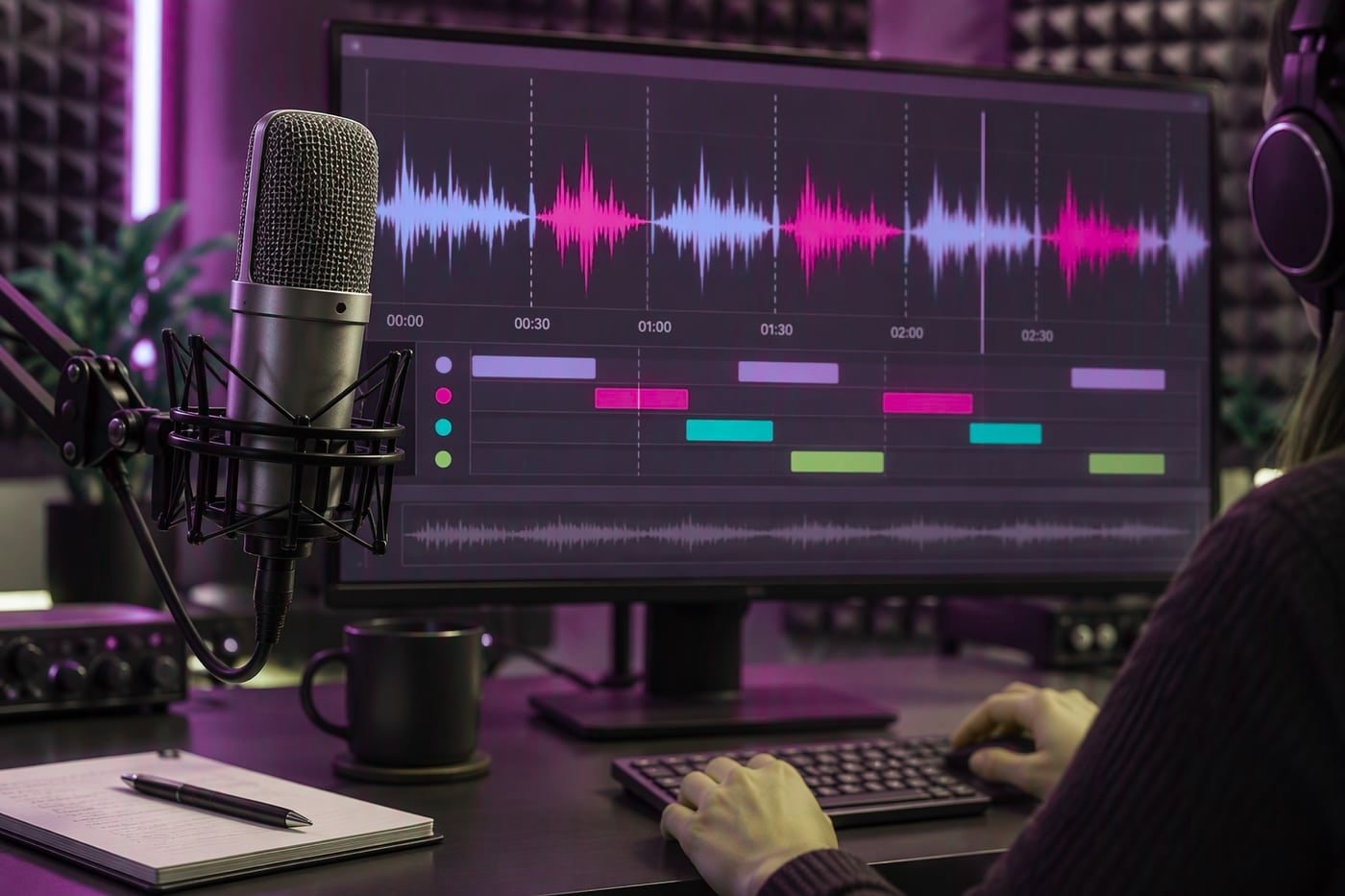
Transcription & Timestamps
Word-level or segment-level timing with punctuation, disfluency, and overlap conventions defined up front.
Transcription, speaker diarization, intent tagging, and audio event labeling for speech models, voice assistants, and contact-center AI.
 Data LabelingNP / Audio Annotation
Audio datasets combine timing, speaker identity, language, and intent. A transcript without accurate timestamps or speaker turns is only partially useful. We annotate every layer your model needs and keep them aligned.
Reviewers work with waveform and spectrogram views, applying verbatim or clean-read transcription rules, speaker boundaries, and event tags. Sensitive content is redacted according to your policy before delivery.

Scope is confirmed in writing — including task definitions, acceptance criteria, and delivery format — before production begins.
Word-level or segment-level timing with punctuation, disfluency, and overlap conventions defined up front.
Speaker segmentation and turn boundaries for meetings, calls, and multi-speaker recordings.
Call intent, escalation signals, sentiment, and acoustic event labels for conversational AI.
Coverage checks, timestamp alignment, and removal of sensitive spoken information.
A four-stage operating rhythm that keeps definitions stable, progress visible, and quality measurable.
We review sample recordings, language coverage, channel quality, and redaction requirements.
A pilot set locks spelling, timestamp, and speaker conventions.
Annotators transcribe and tag in your tooling with daily quality sampling.
Alignment checks, spot audits, and structured exports with QA summaries.
Coverage depends on the project. We confirm reviewer availability and language validation during scoping before committing to a language set.
Yes. We define handling rules for overlap, background noise, and unintelligible segments, and report those rates in the delivery summary.
Recordings are processed under NDA in access-controlled environments. Redaction can happen before annotation or as a dedicated task.
Share your dataset, tooling, quality thresholds, and timeline. We will respond with a structured scope and delivery plan.